


Ancient, sun-baked, and deeply symbolic, Turkestan is the city many Kazakhs call the spiritual heart of the nation. Set on the historic Silk Road, it draws pilgrims and history lovers to its mosques, mausoleums, and archaeological sites—foremost among them the Mausoleum of Khoja Ahmed Yasawi, a 14th-century Timurid masterpiece and UNESCO World Heritage Site. With thoughtful timing, you can experience Turkestan’s soul in a single, unhurried day: dawn prayers and blue tiles, a halal comfort-food lunch, a short excursion to a legendary shrine or living-history complex, and a luminous evening among new fountains and museums.
Why Turkestan matters
Turkestan’s identity flows from Khoja Ahmed Yasawi, a revered Sufi poet and teacher whose legacy shaped Turkic Islamic culture across Central Asia. The city has long been a pilgrimage destination—Kazakh tradition even compares repeated visits here to a “small hajj.” Beyond devotion, the architecture itself is spellbinding: a colossal iwan portal clad in turquoise and lapis tiles, soaring brick vaults, and a cool, echoing interior that shelters centuries of memory.
The perfect one-day itinerary
1) Morning: UNESCO splendor and quiet courtyards (08:30–12:00)
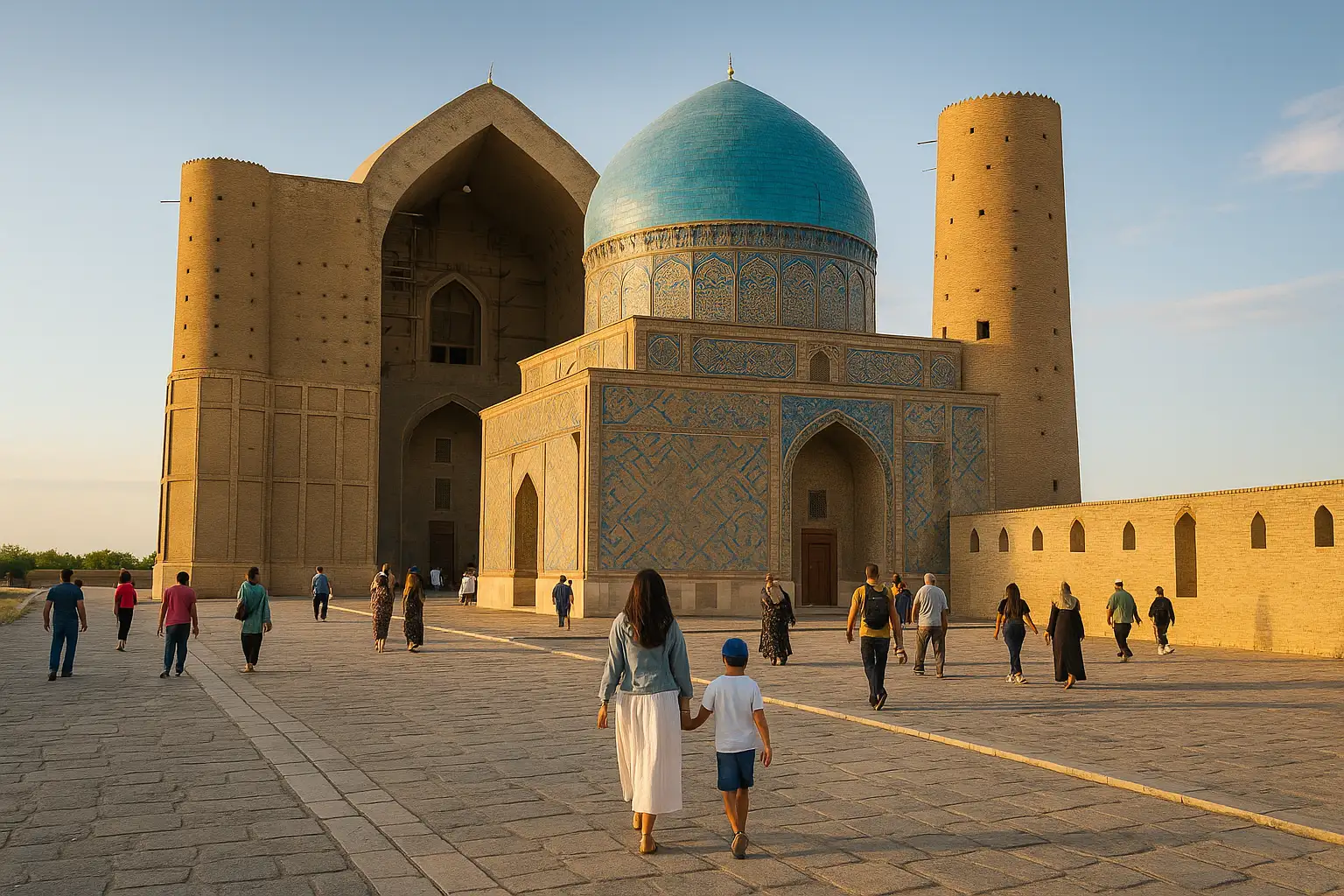
- Arrive early at the Yasawi Mausoleum to enjoy softer light, cooler air, and fewer crowds. Stroll the outer walls first, noting the monumental portal (pishtaq) and intricate geometric tilework.
- Inside the complex, move slowly through the chambers—funerary hall, mosque, and domestic rooms—where devotional practice and daily life once intermingled.
- Step into the surrounding archaeological park: remnants of the medieval citadel and caravanserai trace the outlines of an older city. Interpretive plaques help you visualize life along the Silk Road.
Etiquette & dress: This is an active sacred site. Wear modest clothing (shoulders and knees covered); women should carry a scarf for interior spaces. Remove shoes where requested. Photography is welcome outdoors—ask permission if people are in frame.
2) Midday: Halal comfort food and a breather (12:15–13:30)
Break for lunch at a local halal café. Classic dishes to try:
- Beshbarmak (hand-cut noodles with slow-cooked meat and onion broth)
- Shorpa (fragrant lamb soup)
- Lagman (pull-noodle stew) and samsa (baked pastries)
- Pair with hot tea; in warm months, finish with kymyz (fermented mare’s milk) if you’re curious, or stick to compote and fresh bread.
3) Afternoon: Choose your side trip (14:00–17:00)
Option A — Arystan Bab Mausoleum
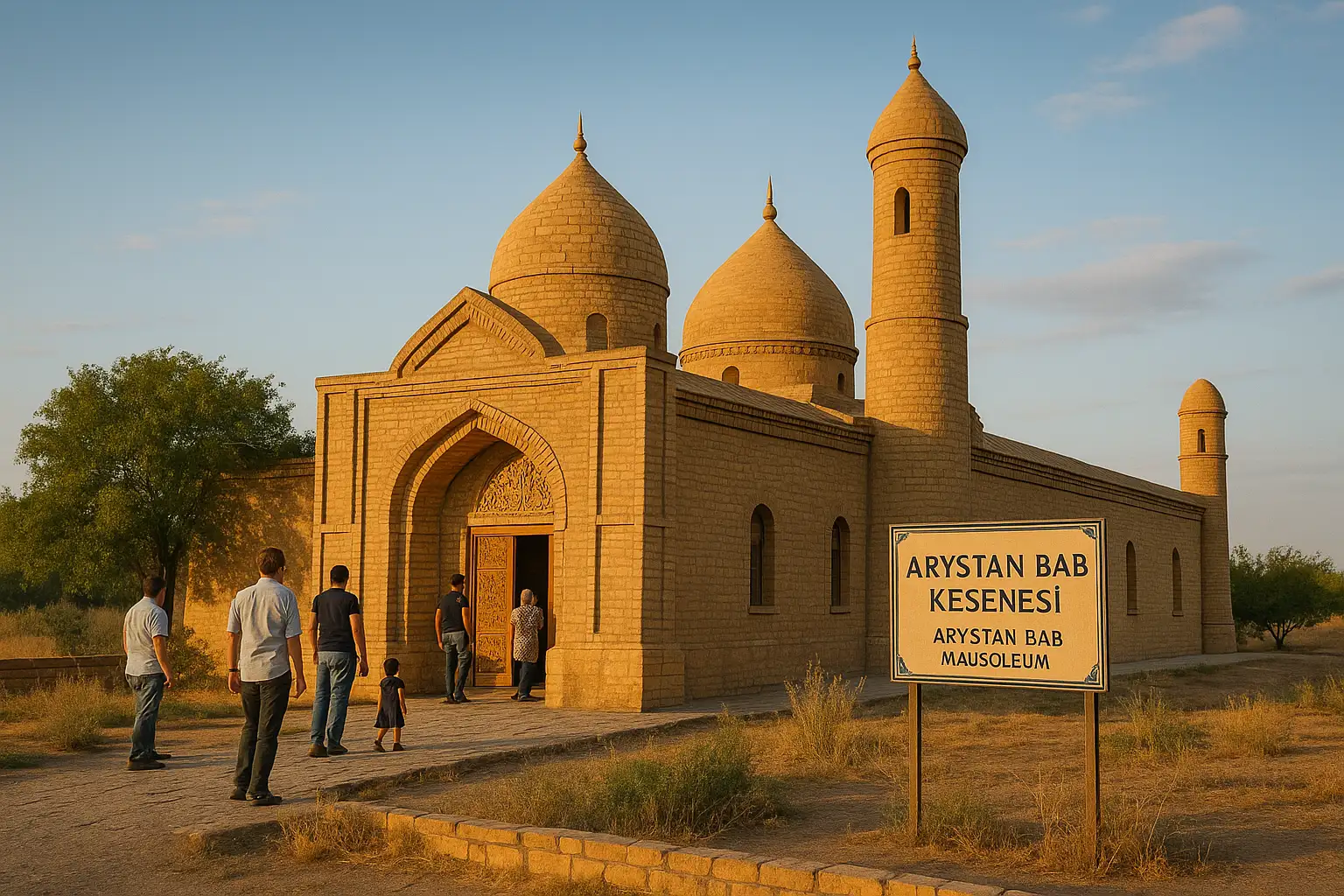
A short drive through steppe landscapes leads to the shrine associated with Yasawi’s spiritual lineage. The complex is simpler than Yasawi’s but deeply atmospheric—low brick domes, fluttering prayer ribbons, and a sense of continuity between teacher and disciple. It’s ideal if you want a quieter devotional stop.
Option B — “Caravanserai” Cultural & Tourist Complex
Prefer living history? Head to an ethnographic complex that recreates medieval urban life with artisans’ workshops, staged performances, and model caravanserai streets. It’s engaging for families, photographers, and anyone who enjoys hands-on exhibits.
4) Evening: New Turkestan after sunset (18:30–21:00)
Return to the modern center, where recent investment has added landscaped promenades, dancing fountains, museums, and family-friendly plazas. As the heat fades, locals drift out for evening walks; cafés glow; minarets silhouette against the sky. It’s the moment Turkestan feels both ancient and newly confident—a living capital of Turkic culture.
Practical tips for a smooth visit
When to go. The city is visit-able year-round, but the best months are March–May and September–October. Summers can exceed +40 °C; winters bring dry, windy cold. Plan an early start and a rest at midday in hot weather.
Getting there. Turkestan has direct air and rail links with major Kazakh cities. From the airport or station, pre-arranged transfers or official taxis are the simplest options. Within the city, short rides are inexpensive.
Dress & conduct. Modesty matters in sacred spaces: loose trousers/skirts, covered shoulders, and a scarf for women. Remove shoes when asked; keep voices low; avoid blocking doorways for photos.
Food & prayer. Halal dining is the norm; vegetarian options are improving (look for baked pumpkin dishes, fresh salads, and breads). Prayer rooms are easy to find near major sites.
Cash & cards. Cards are widely accepted in new venues; keep small cash for site entries, donations, and small kiosks. ATMs cluster near central streets and malls.
Heat & hydration. In hot months, carry water, a wide-brim hat, and sunscreen. Shade is intermittent around archaeological areas—time your open-sun segments in the morning.
Respectful photography. Avoid photographing people at prayer without permission. Tripods may be restricted inside; handheld gear is fine.
Understanding the Yasawi Mausoleum: things to notice
- The great portal (pishtaq). One of Central Asia’s most imposing facades, its scale meant to awe approaching pilgrims.
- Timurid tilework. Glazed brick and faience patterns—stars, arabesques, and calligraphy—frame the sky with blues and coppers.
- Acoustics. Whisper under the domes and hear the soft echo—architecture as spiritual technology.
- Urban context. The mausoleum anchors a sacred precinct where learning, hospitality, and worship once interwove—more campus than single monument.
Sample schedule (pin it!)
- 08:30 Arrive at Yasawi Mausoleum (cool, quiet light for photos)
- 10:30 Archaeological park walk and museum rooms
- 12:15 Halal lunch: beshbarmak or shorpa
- 14:00 Side trip: Arystan Bab (quieter, contemplative) or Caravanserai (interactive, family-friendly)
- 17:30 Return to city; rest, tea, souvenir browsing (ceramics, embroidery)
- 19:00 Evening stroll among fountains and lit facades
- 20:30 Dinner and tea; optional night photos of the mausoleum’s illuminated tiles
For families, elders, and first-time visitors
- Shade & seats: Bring a compact umbrella or scarf for shade; benches dot main paths but can be sparse near ruins.
- Footwear: Wear breathable shoes with grip; dust and polished tile can both be slippery.
- Pace: Factor in quiet reflection time—Turkestan rewards slowness.
Responsible travel
Turkestan’s heritage is both fragile and sacred. Stay on marked paths, avoid touching tile surfaces, and keep donations local—buy crafts from artisans, tip guides, and dine at family-run cafés. Your visit sustains restoration, scholarship, and living traditions.
The takeaway
One day in Turkestan balances reverence and discovery: a sunrise approach to a world-class monument, a meal rooted in steppe hospitality, an afternoon with legends or artisans, and a serene, fountain-lit evening. You’ll leave with blue-tile afterimages and a deeper sense of the Turkic world—proof that Kazakhstan’s spiritual capital still speaks in a clear, welcoming voice.
